
On this page
When platelet-rich plasma therapy in St. Peters, MO, comes up, it is usually because an injury, sore joint, or irritated tendon has lasted longer than expected. Maybe the knee still aches after activity. Maybe the shoulder feels weaker than it should. Maybe a tendon calms down for a while, then flares again as soon as normal movement returns.
At Morningstar Neuropathy & Pain Treatment Center, we understand how discouraging that can feel. PRP gives patients a way to look beyond short-term symptom control and ask a more useful question: what does this area need in order to recover better?
Why Some Injuries Take Longer to Heal
Tendons, ligaments, muscles, and joints do not all heal at the same pace. A mild muscle strain may improve with rest, gentle movement, and time. Tendons can take longer because they usually have less blood flow than muscle tissue, which is part of why tendon irritation can linger well past the original strain. Joints may stay sensitive when cartilage changes, inflammation, or repeated stress keep irritating the area.
That is why an injury can feel minor at first and still become a longer problem. The body may be dealing with small areas of strain, swelling, or reduced tolerance for activity even after the sharpest pain has settled.
For active adults, this can be frustrating. A painful knee, hip, shoulder, or elbow can change how someone works, exercises, sleeps, or handles routine tasks. Over time, the body may start guarding the area. Movement becomes stiffer, nearby muscles compensate, and daily activity starts to feel less natural.
How PRP Works With the Body's Repair Signals
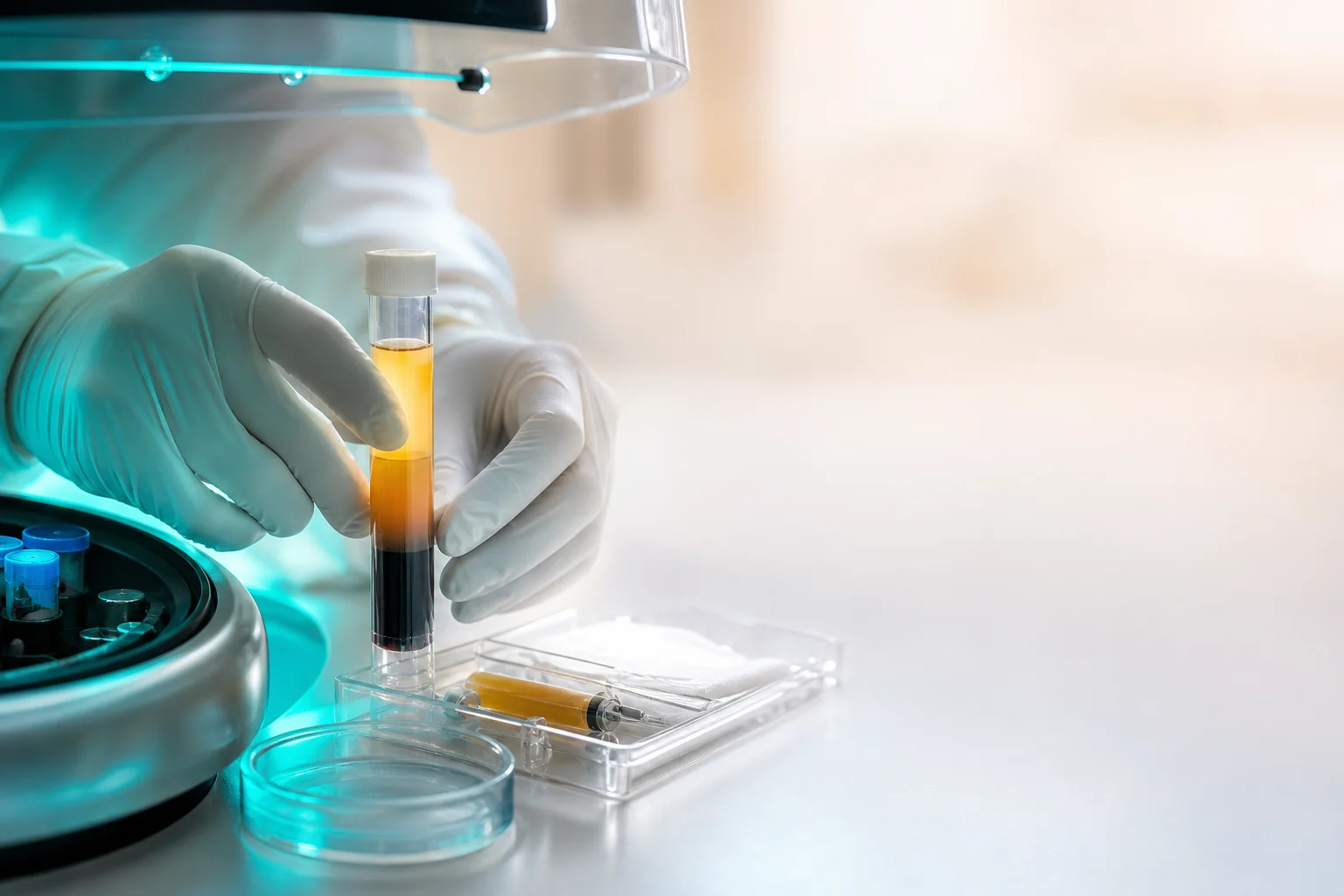
Platelet-rich plasma, often called PRP, uses components from a patient's own blood. A small blood sample is drawn and processed to concentrate the platelets. That platelet-rich portion is then placed into the area being addressed.
Platelets contain growth factors and signaling proteins that play a role in the body's normal healing response. The idea is to bring a higher concentration of those signals to tissue that may need more focused help.
This is why PRP is often discussed as part of regenerative care. It works with the body's biology instead of simply covering discomfort for a short period. For people researching platelet-rich plasma therapy in St. Peters, MO, that distinction can be important. The focus becomes how the area is responding, how well it tolerates stress, and whether its healing environment may need additional support.
When PRP May Be Considered
PRP may be discussed when symptoms seem connected to soft tissue strain, joint irritation, or an injury that has not settled as expected. It may also be considered for people looking for a minimally invasive option centered on tissue health.
Tendon Irritation
Tendons connect muscle to bone. They help transfer force when you walk, lift, reach, squat, or exercise. When a tendon becomes irritated, symptoms may appear during repeated motion or after activity.
PRP may be considered when tendon discomfort keeps returning or when the area seems slow to calm down. The purpose is to improve the local environment so the tendon has better conditions to handle movement over time.
Joint Discomfort
Ongoing joint pain can develop from arthritis, overuse, old injuries, or changes in the tissues that help the joint move smoothly. Some people notice stiffness first. Others feel aching, swelling, or pain with stairs, gripping, standing, or getting up after sitting.
At Morningstar Neuropathy & Pain Treatment Center, platelet-rich plasma therapy may be part of the conversation for patients dealing with joint or soft tissue concerns. Whether it makes sense depends on the symptoms, health history, goals, and evaluation.
Injury Recovery
An injury can affect movement even after the initial soreness improves. A knee may feel less stable. A shoulder may feel weaker. A hip, ankle, or elbow may change the way someone moves through the day.
PRP may be considered when the goal is to help the injured area respond better, calm irritation, and improve tolerance for daily activity. It works best as part of a broader plan that also considers movement patterns, activity demands, and follow-up care.
What Makes PRP Different From Standard Pain Relief
Many common pain relief options are aimed at reducing symptoms. That can be helpful when discomfort is affecting sleep, work, or normal activity. PRP has a different role because it is intended to support the repair process in the targeted area.
This can help patients ask more specific questions. Is the issue coming from a tendon, joint, ligament, or surrounding soft tissue? Is the area still inflamed? Is movement placing too much stress on tissue that is not ready for it yet?
Those details matter in real life. A sore knee can change how someone climbs stairs. A shoulder injury can make work tasks harder. A painful hip can make exercise feel less realistic. The plan should reflect how the problem is actually showing up, not just where it hurts.
Why Local Care Can Make the Process Easier
For patients considering PRP injections in St. Peters, MO, access can affect consistency. Our office is located at 4710 Mexico Rd, Suite C, St. Peters, MO 63376, which can be convenient for patients traveling from nearby neighborhoods, Mid Rivers Mall Drive, Cave Springs, or the I-70 corridor.
Local care also helps with follow-through. PRP is not only about the injection itself. Patients often need guidance about what to expect afterward, how to return to activity, and when to communicate changes in soreness, swelling, or mobility.
At Morningstar Neuropathy & Pain Treatment Center, the conversation stays practical. A runner with knee irritation may need a different plan than someone with shoulder pain after years of physical work. A patient with arthritis may have different goals than someone recovering from a recent strain.
What to Expect During a PRP Visit
A visit should start with a careful review of the painful area. That may include when symptoms began, what movements make them worse, whether stiffness or swelling is present, and how the problem affects daily routines.
If PRP injections are considered appropriate, the process usually involves drawing a small blood sample, preparing the platelet-rich portion, and placing it into the area being addressed. Patients may feel pressure or mild discomfort, but the procedure is designed to be minimally invasive.
Afterward, instructions may vary based on the body part treated and the patient's goals. Some people may need to limit certain activities for a short period. Others may receive guidance on gradual movement and follow-up. Clear expectations can make the process feel easier to understand.
A More Focused Way to Think About Healing
When discomfort keeps returning after rest, activity changes, or standard care, platelet-rich plasma therapy in St. Peters, MO, may be worth discussing. PRP can help shift the conversation toward tissue health, repair signals, and how the body responds after strain or injury.
Morningstar Neuropathy & Pain Treatment Center works with patients who want a clearer explanation for ongoing tendon, joint, or injury-related pain. If symptoms are affecting how you move through the day, schedule an appointment to talk through your options and see whether PRP may be a good fit.
Ready to take the next step?
Talk with our St. Peters, MO team about a drug-free, non-surgical plan built around the cause of your pain.